
Mercedes-AMG’s new electric SUV makes 1,153 hp, and the figure most US buyers will live with is 16 minutes. The Mercedes-AMG GT SUV, revealed October 17, 2026 and arriving at US dealers in summer 2027 as a 2028 model, is quoted at a 12-minute 10–80% charge. That time needs a 710-kW charger, and that’s the catch.
The specs are real and the hardware is new. But on the 400-kW stations that exist today, this AMG charges about as quickly as the Porsche Cayenne Turbo Electric it’s built to beat.
Quick answer: The Mercedes-AMG GT SUV is an electric performance SUV arriving at US dealers in summer 2027 as a 2028 model. It comes as the GT 53 (536 hp), GT 55 (805 hp) and GT 63 (1,153 hp peak). Mercedes quotes a 10–80% charge in 12 minutes. US pricing hasn’t been announced.
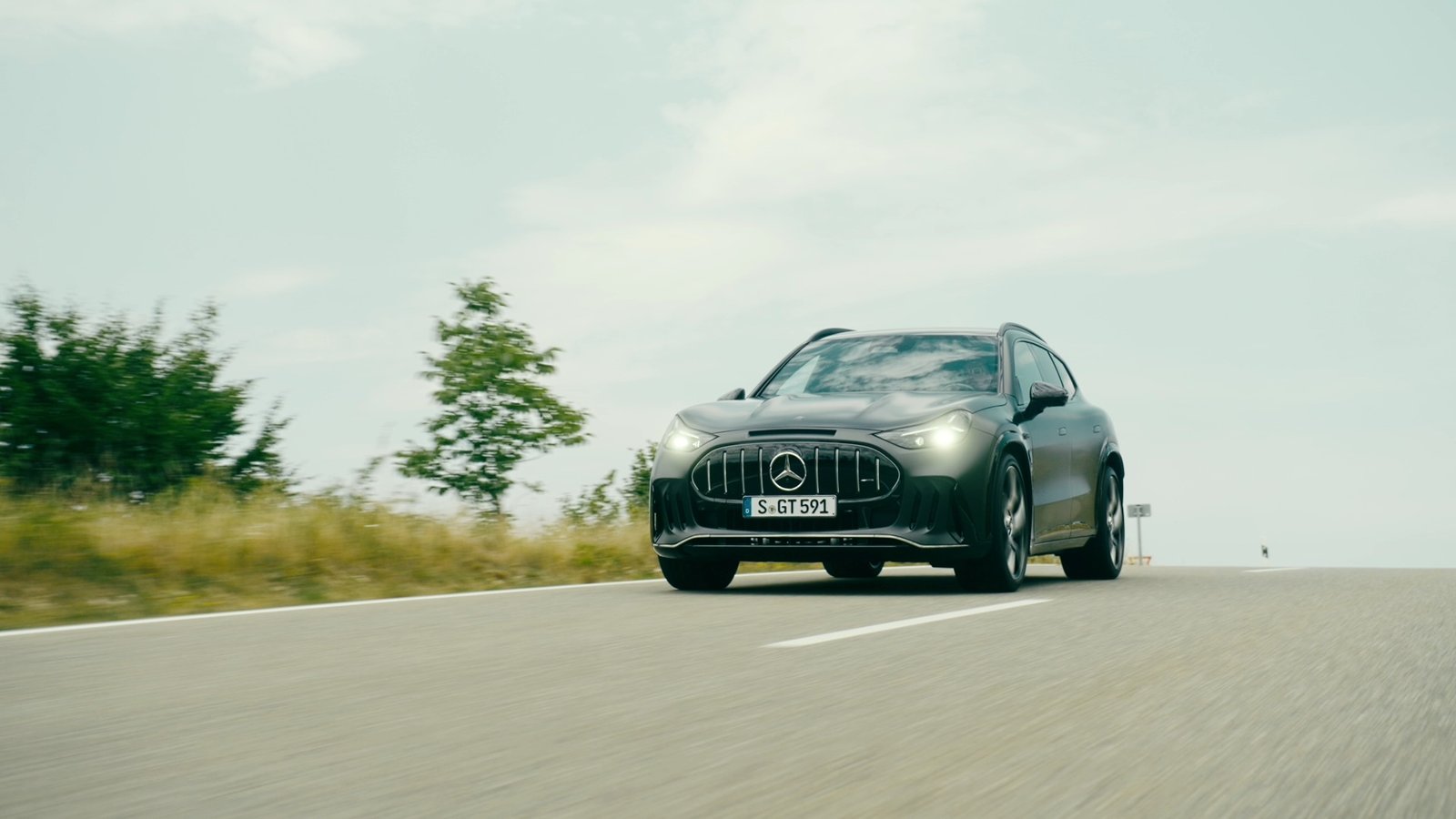
Which Mercedes-AMG GT SUV versions are coming?
Three, all with AMG Performance 4MATIC+ all-wheel drive and rear-axle steering. These are the launch figures from Mercedes-Benz USA’s AMG GT SUV press release, several of them marked as preliminary estimates.
- GT 53: two motors, 536 hp peak, 362 hp continuous, 590 lb-ft, 106-kWh usable battery, 0–60 mph in 4.1 seconds, 143-mph top speed
- GT 55: three axial-flux motors, 805 hp peak, 711 hp continuous, 1,372 lb-ft, 128-kWh usable battery, 0–60 mph in 3.0 seconds
- GT 63: three axial-flux motors, 1,153 hp peak, 711 hp continuous, 1,475 lb-ft, 128-kWh usable battery, 0–60 mph in 2.6 seconds, 168-mph top speed, carbon ceramic brakes
The SUV rides on the AMG.EA platform shared with the electric AMG GT 4-Door. Cargo space is 21.4 cubic feet in the trunk plus a 2.8-cubic-foot frunk, and a three-passenger rear bench is standard.
What does 1,153 hp mean in a 5,941-pound SUV?
Less than the headline suggests, for most of your driving. Mercedes lists the GT 63 at 2,695 kg, or about 5,941 pounds, and its 1,153-hp peak is a boost mode that lasts 63 seconds. After that, the motors fall back to a 711-hp continuous rating, which the GT 55 also carries.
That’s the mechanism behind the gap: electric motors can run far past their sustained rating for short bursts, until heat in the windings and the battery’s discharge limits force the output back down. For a launch or an on-ramp, you get the full number. On a 20-minute mountain road, you’re driving a 711-hp SUV. That’s why the GT 55 could be the smarter buy: it shares the GT 63’s continuous rating and battery.
How fast does the AMG charge on US chargers?
Mercedes quotes 10–80% in 12 minutes for the GT 55 and GT 63, and 11 minutes for the GT 53. InsideEVs, reporting on November 3, 2026, notes the 12-minute figure needs a 710-kW charger, and lists 16 minutes for the bigger-battery cars on a 400-kW station. The GT 53 needs 14.
Here’s the practical part. US models get a native NACS port and 11-kW AC charging, and they switch automatically to 400-volt operation at older DC stations. That keeps you charging almost anywhere, but at a 400-volt plug the speed drops well below these figures. Plan road trips around the fastest stations on your route, not the Mercedes brochure.
AMG GT 63 vs Porsche Cayenne Turbo Electric
The Porsche is the obvious rival, and it’s already priced. Edmunds’ November 19, 2025 report lists the Cayenne Turbo Electric at $163,000 before destination, with 1,139 hp under launch control, 1,106 lb-ft and a 113-kWh battery. Porsche claims 0–60 mph in 2.4 seconds and a 16-minute 10–80% charge at its 400-kW peak.
So on today’s US chargers, the two tie on charging time, the Porsche is quicker to 60 by 0.2 seconds, and the AMG brings 369 more lb-ft and 15 more kWh of usable battery. If Mercedes prices the GT 63 near $163,000, the bigger battery is the tiebreaker. Our analysis: Mercedes will need to land below the Porsche to win buyers who don’t care about the badge.
For context on how far luxury SUV pricing now stretches, the Cadillac Escalade-V 125th Anniversary costs $239,000, and Lexus is chasing the family buyer with its three-row TZ electric SUV.
What Mercedes hasn’t told US buyers yet
Price is the big gap. Mercedes hasn’t published US pricing on its 2028 AMG GT SUV preview page. InsideEVs cites German prices for the related GT 4-Door of €115,430 to €196,350, but those don’t convert into a US sticker.
Range is the other. Mercedes quotes 385–435 miles for the GT 55 and GT 63 and 371–415 miles for the GT 53, all on the European WLTP cycle. EPA estimates usually come in lower, so wait for the official EPA label before planning around those numbers. If you’re weighing a cheaper electric SUV, our Cadillac Lyriq vs Tesla Model Y comparison covers the other end of the market.
For US buyers, the number to hold Mercedes to is 16 minutes, not 12. That’s the 10–80% time the Mercedes-AMG GT SUV needs on the 400-kW chargers you can actually find, and it ties the Cayenne Turbo Electric. Whatever separates these two will come down to price.
Mercedes-AMG GT SUV questions answered
When does the Mercedes-AMG GT SUV come to the US?
Mercedes-Benz USA says the electric AMG GT SUV reaches US dealerships in summer 2027 as a 2028 model. Three versions launch together: the GT 53, GT 55 and GT 63. Mercedes hasn’t announced US pricing yet, so expect those details closer to the on-sale date.
How much horsepower does the AMG GT 63 SUV have?
The GT 63 makes 1,153 hp at peak and 1,475 lb-ft of torque from three axial-flux motors. Peak output is a boost function that lasts 63 seconds, according to Mercedes. Its continuous rating is 711 hp, the same as the GT 55. Mercedes estimates 0–60 mph in 2.6 seconds.
How fast does the Mercedes-AMG GT SUV charge?
Mercedes quotes 10–80% in 12 minutes for the GT 55 and GT 63 on a 710-kW DC charger, and 11 minutes for the GT 53 at 600 kW. On a 400-kW station, InsideEVs reports 16 and 14 minutes. US models use a NACS port and accept 11-kW AC charging at home.