
About 26,000 more Tundra owners can book the engine fix now, months ahead of Toyota’s own schedule. Pickup Truck + SUV Talk reported on October 25, 2026 that updated materials for the Toyota Tundra recall list Phases 3 and 4 as available. That’s real progress, but you shouldn’t read it as a promise of a new engine: the remedy is an inspection first, and roughly 75,000 trucks are still scheduled for 2027.
Quick answer: Toyota’s campaign 25TA14 covers about 157,000 2022–2024 Tundras whose twin-turbo V6 may hold machining debris. Phases 1 through 4, roughly 49,000 trucks, are now listed as open for the free remedy. A dealer runs a bearing inspection, and Toyota replaces the engine only if the software can’t clear it.
What changed with the Toyota Tundra recall this week?
Toyota’s dealer letter, last updated September 17, 2026 and filed with NHTSA, split the recall into nine phases. Phase 1 (about 10,000 trucks) and Phase 2 (about 13,000) were open. Phase 3 was penciled in for December 2026 and Phase 4 for February 2027, each covering about 13,000 trucks.
The chart Pickup Truck + SUV Talk obtained now marks Phases 3 and 4 as available. That lifts the open group from about 23,000 trucks to about 49,000. Toyota hasn’t posted a public update confirming the date those phases opened, so treat the exact timing as reported, not official.
Why are these engines being recalled?
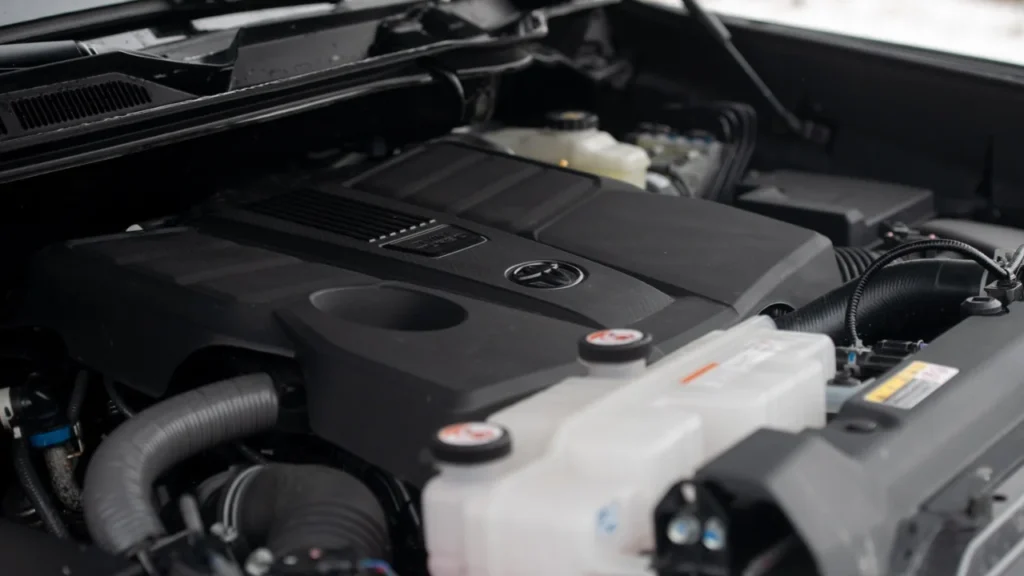
Toyota says machining debris may not have been cleared from some engines at the factory. That grit ends up in the oil and chews on the No. 1 main bearing, the one closest to the front of the crankshaft. Once that bearing wears, you get knocking, rough running, a no-start or a loss of power. A loss of power at highway speed is the crash risk that makes this a safety recall.
Toyota first filed the defect report on November 6, 2025 (NHTSA recall 25V767). It expanded the population on May 20, 2026 with recall 26V320, adding 2024 trucks built from early February to early August 2024. You can read the full Toyota dealer letter on NHTSA’s site.
Will Toyota actually replace your engine?
Maybe. Dealers use inspection software to check the No. 1 main bearing and pull available drive data from the truck. If the software can’t confirm the bearing is free from abnormal wear, the dealer replaces the engine at no charge. If it passes, you drive home on the original engine.
Here’s the mistake owners make. Some have paid for independent oil analysis and plan to wave the report at the service desk. Toyota’s own FAQ says an oil analysis isn’t enough to judge this bearing, so the dealer inspection is the only result that counts. Skip that expense.
The numbers in the dealer letter tell you how your service day will go. The inspection is billed at 1.5 hours. A full inspection plus engine swap is a 14.5-hour job, and replacement engines ship from a single third-party warehouse in Memphis, Tennessee, in 3–8 business days. If your truck fails, Toyota says you’ll get a rental at no charge until the new engine is in.
When will the rest of the trucks get the fix?
The later groups haven’t moved. The September letter lists Phase 5 (about 15,000 trucks) for March 2027, Phase 6 (14,000) for April, Phase 7 (14,000) for June, Phase 8 (14,000) for August and Phase 9 (18,000) for September 2027. Phases 7 through 9 are the 2024 trucks added in May. Toyota’s own footnote: “Estimated remedy launch dates are subject to change.”
One caution on the math. The nine phases add up to about 124,000 trucks, while the same letter puts the total at about 157,000. Toyota doesn’t explain the gap, so don’t assume your truck sits in a phase just because it’s a 2023 or 2024 model.
What should you do if you own or want a used Tundra?
Owners should run the VIN through Toyota’s recall lookup and ask the dealer to confirm status under campaign 25TA14. An open recall and an available remedy are two different statuses. If the screen says “Remedy Not Available,” you’re in an interim phase, and a dealer who does the work early can have the claim debited by Toyota. If your engine knocks or won’t start, don’t wait for your phase: call the dealer or Toyota’s Brand Engagement Center at 1-888-270-9371.
Shopping used is where this gets practical. A 2023 or 2024 Tundra in Phases 1–4 can be inspected before you sign, while one in Phase 9 might not be eligible until September 2027. Ask the seller for the VIN, check it, and price a late-phase truck as if you’ll live with an unresolved recall for a year.
Toyota’s letter also bars dealers from certifying any truck with this recall open, so a late-phase Tundra can’t wear a certified badge until the work is done. The same pattern showed up in our coverage of the Toyota Land Cruiser hybrid fuel leak recall, where the fix also rolled out in stages.
Truck recalls are stacking up this fall. Ford is replacing instrument clusters in the speedometer recall covering 102,159 Super Duty and F-150 trucks, and Land Rover is dealing with the Range Rover rearview camera recall. Neither one, though, can end with a new engine bolted into your truck.
Toyota Tundra recall questions owners are asking
Which Toyota Tundras are included in the engine recall?
Toyota’s campaign 25TA14 covers about 157,000 Tundras: 2023–2024 trucks built from late December 2022 to mid-February 2024, 2024 trucks built from early February to early August 2024, and about 30 older trucks repaired with affected service engines. Your model year alone doesn’t prove it’s included, so check your VIN.
Will Toyota replace my Tundra engine for free?
Only if the inspection says so. A dealer checks the No. 1 main bearing with Toyota’s inspection software and reviews drive data. If the software can’t confirm the bearing is free from abnormal wear, Toyota replaces the engine at no charge and offers a free rental until the swap is finished. Otherwise you keep your engine.
Is it safe to drive a recalled Tundra before the fix?
Toyota tells owners to get the free inspection as soon as their phase opens. Until then, watch for engine knocking, rough running or a no-start, and contact a Toyota dealer right away if you notice any of them. A sudden loss of power at highway speed is the crash risk behind this recall, so don’t ignore symptoms.
The Toyota Tundra recall now covers 49,000 trucks with an open remedy and 75,000 more on a 2027 calendar. If you’re in Phases 1–4, book the inspection this week, because engines come from one warehouse and early slots won’t stay empty.