
We are officially in the eleventh hour for the traditional performance car. As of this writing in May 2026, the automotive world is collectively bracing for the November rollout of the ultra-stringent Euro 7 emissions standards. For the past few years, the prevailing narrative has been that these new regulations would be the final nail in the coffin for high-output, non-hybridized internal combustion engines. But if you thought the engineers in Munich were just going to quietly pack up their straight-sixes and pivot exclusively to batteries, you haven’t been paying attention to the M division.
Enter BMW M Ignite.
Slated to hit series production in just a few short months—starting this July—BMW’s newly patented pre-chamber combustion system is nothing short of an engineering masterstroke. It is a direct transfer of top-tier motorsports technology to the street, specifically designed for the beloved 3.0-liter twin-turbo S58 inline-six engine that powers the modern BMW M2, M3, and M4.
The goal? To drastically improve engine efficiency under high load, crush the incoming Euro 7 emissions targets, and, most importantly for the enthusiasts reading this, keep the visceral thrill of a pure combustion M car alive for years to come. Here is the complete breakdown of how BMW is using Formula 1 science to save the straight-six.
The Problem with Traditional Combustion
To truly understand the brilliance of BMW M Ignite, we first need to look at the limitations of the engine currently sitting in your driveway.
For over a century, the basic premise of gasoline engine ignition hasn’t changed much. A piston compresses an air-fuel mixture, and a single spark plug arcs electricity across a tiny gap to ignite it. This creates a “flame front”—a literal wave of fire that travels outward from the spark plug, across the cylinder, pushing the piston down.
Under normal, everyday driving conditions, this works brilliantly. But when you are hammering an M3 out of a corner on a track day, the engine is operating under massive loads and high RPMs. That single flame front takes a microscopic, yet crucial, amount of time to travel across the large bore of a high-performance cylinder.
To compensate for this, engines dump extra fuel into the cylinder (running “rich”) to keep temperatures down and prevent a destructive phenomenon known as “knock,” or uncontrolled self-ignition. The downside? Dumping extra fuel ruins your fuel economy and spikes your exhaust emissions. With Euro 7 breathing down their necks, BMW could no longer rely on running rich to save their engines under full throttle.
What is BMW M Ignite? The Pre-Chamber Revolution
This brings us to the mechanical heart of the solution: pre-chamber combustion.
At the core of the BMW M Ignite technology is a newly integrated, miniaturized “pre-chamber” machined directly into the cylinder head. This tiny chamber sits just above the main combustion chamber and is connected to it via a series of incredibly small, precisely angled transfer ports.
Crucially, this pre-chamber features its own dedicated spark plug and ignition coil. Yes, you read that correctly: the updated S58 engine effectively utilizes two entirely separate ignition systems per cylinder.
The introduction of pre-chamber ignition into a mass-produced inline-six is a watershed moment for combustion engineering. By creating a high-energy ignition event in a localized, controlled environment first, you completely bypass the thermal efficiency limits of a traditional spark plug. It’s the difference between lighting a bonfire with a single match versus hitting it with a multi-directional blowtorch.
Here is exactly how the system behaves depending on how you are driving:
The Low-RPM Cruise
When you are commuting in traffic or cruising down the highway at low and mid-engine speeds, the S58 engine operates much like it always has. Combustion relies primarily on the conventional, standard spark plug located in the main chamber. It’s smooth, predictable, and highly efficient for part-throttle applications.
The High-Load Attack Mode
Drop a gear, bury the throttle, and the BMW M Ignite system violently wakes up. At high RPMs and heavy load conditions, the pre-chamber ignition seizes control.
During the compression stroke, a specific portion of the air-fuel mixture is shoved upward into the tiny pre-chamber. The dedicated pre-chamber spark plug ignites this tightly packed mixture. Because the space is so small, the pressure spikes instantaneously. This explosive pressure forcefully ejects the burning mixture out through the transfer ports.
The result? Supersonic jets of flame shoot into the main combustion chamber. Instead of one slow-moving flame front originating from a single spark plug, the main fuel mixture is instantaneously ignited at multiple points across the cylinder simultaneously.
The Physics of Going Faster, Cleaner
The physics behind these ignition jets offer a cascade of benefits that solve BMW‘s Euro 7 headache while delighting drivers.
First, the combustion rate is significantly increased. Because the fuel burns so rapidly and thoroughly, the engine extracts far more mechanical energy out of every drop of gasoline. This allows the engine to run leaner (using less fuel) even at full throttle, without risking engine knock.
Secondly, BMW notes that this ultra-fast, multi-point combustion actually lowers overall exhaust gas temperatures. High exhaust gas temperatures are the enemy of turbochargers and catalytic converters. By keeping the thermal stress down, the catalytic converters can do their job more effectively, cleaning up the tailpipe emissions to comfortably slide under the Euro 7 wire.
Variable Turbine Geometry: The Perfect Pairing
BMW didn’t stop at the cylinder head. To fully capitalize on the new thermodynamics provided by the M Ignite system, the updated S58 engines will receive a substantial upgrade to their forced induction systems.
The standard twin-scroll turbochargers are being binned in favor of turbos featuring Variable Turbine Geometry (VTG).
Historically, VTG turbochargers have been notoriously difficult to implement on gasoline engines because gasoline exhaust gases run significantly hotter than diesel exhaust gases, frequently melting the delicate moving vanes inside the turbo. Porsche famously conquered this issue over a decade ago on the 911 Turbo using aerospace-grade materials, and now BMW is bringing it to the M lineup.
VTG turbos feature little movable vanes inside the turbine housing. At low RPMs, the vanes close up, restricting the exhaust flow to spool the turbo incredibly fast, eliminating turbo lag. At high RPMs, the vanes open wide to allow massive airflow for top-end power.
When paired with the faster, cooler combustion of the BMW M Ignite system, the VTG turbos can operate in their absolute sweet spot. Add in a bump in engine compression ratio, and the result is an inline-six that promises throttle response sharper than a naturally aspirated engine, with the lung capacity of a traditional turbo setup.
Will It Make More Power? The Enthusiast’s Dilemma
Now, we must address the elephant in the room. Whenever automakers talk about “efficiency” and “emissions,” car enthusiasts instinctively brace for a drop in horsepower, a muffled exhaust note, or a compromised driving experience.
You can breathe a sigh of relief.
Despite this massive, multi-million dollar revision to the engine architecture, BMW sources have confirmed that the power and torque figures for the M2, M3, and M4 are expected to remain completely unchanged from the current outgoing versions.
Some purists might scoff at the fact that such advanced technology doesn’t yield a 50-horsepower bump. But in the context of the 2026 automotive landscape, maintaining power is a monumental victory. Every other automaker is currently strangling their engines with heavy particulate filters and restrictive ECU tuning just to pass emissions, resulting in sluggish, choked-out cars.
BMW has essentially used F1 technology to outsmart the regulators. They’ve managed to keep the aggressive, 500+ horsepower output of the S58 engine completely intact.
[The real world benefit here isn’t on a dyno chart, it’s at the gas pump and on the track. By dramatically reducing fuel consumption under high-load operations, drivers will be able to run significantly longer sessions on a single tank of fuel. You are getting the exact same brutal acceleration, but the engine is working far smarter to deliver it.
The M Division Rollout Strategy
If you are currently waiting on an allocation for a new M car, you need to pay close attention to the calendar. The transition to the BMW M Ignite architecture is happening rapidly.
Starting in July 2026, the production lines in Munich will switch over. Every single variant of the BMW M3 sedan and M4 coupe/convertible built from that month onward will feature the new pre-chamber ignition system and VTG turbos.
Just one month later, in August 2026, the mighty little BMW M2 will receive the exact same technological heart transplant. Displacement will remain at 3.0 liters across the board.
A Line in the Sand for the Combustion Engine
As we look at the broader automotive industry this May, the narrative is heavily skewed toward electrification. Major legacy brands have already announced hard cutoff dates for their internal combustion development. Many have completely disbanded their engine engineering departments.
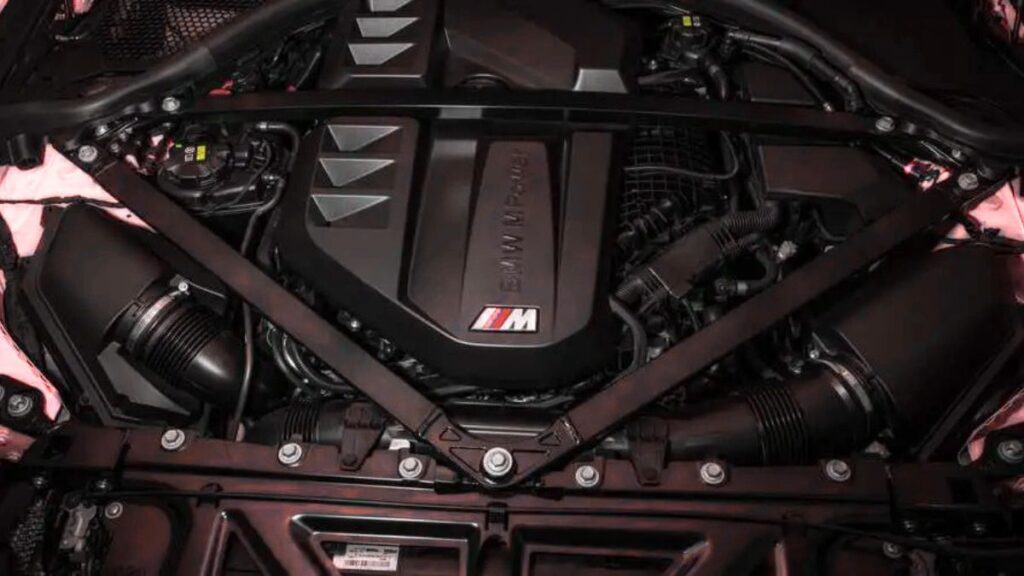
By introducing pre-chamber ignition to series production, BMW is making a profound statement. They are continuing to transfer cutting-edge motorsports technology—systems that have been utilized in high-stakes racing series for years to enable faster, more controlled combustion—directly into the hands of consumers.
This isn’t a stopgap measure. The sheer financial investment required to design, patent, and manufacture a dual-ignition, pre-chamber cylinder head with VTG turbos proves that BMW intends to keep traditional, high-performance internal combustion models viable for road use over the long term.
They are proving that the internal combustion engine isn’t a technological dead end; it just needed a spark of innovation to adapt to a changing world. Or, in the case of BMW M Ignite, it needed a supersonic jet of flame. For the automotive enthusiast who still craves the mechanical symphony of an inline-six ripping toward a 7,200 RPM redline, this summer’s engine update is the best news we’ve had in a decade. Long live the M car.