
You slide behind the wheel of the 2026 Alfa Romeo Giulia, twist the key, and that familiar turbo whistle builds as the 2.0-liter inline-four wakes up. Punch the throttle and you’re rewarded with a surge that pins you back—official 0-60 times of just 5.1 seconds in all-wheel-drive form and 5.5 seconds with rear drive. It’s the kind of quick that doesn’t feel clinical or clinical; it feels alive.
For automotive enthusiasts who’ve grown tired of sanitized German sedans that prioritize screens over steering feel, the latest Giulia is proof that Alfa Romeo still knows how to build a proper driver’s car.
This isn’t some all-new model with flashy redesigns. The 2026 Alfa Romeo Giulia is largely a refined carryover, and that’s exactly why it works so well. Alfa stuck with the proven Giorgio platform, the same one that’s earned the car a loyal following since its debut.
No radical changes were needed because the fundamentals—sharp handling, responsive power, and that unmistakable Italian character—were already spot-on. In a world rushing toward electrification and over-the-top tech, the Giulia quietly reminds us what a compact luxury sport sedan should feel like.
The Engine and Alfa Romeo Giulia Performance That Make the Numbers Matter
At the heart of every 2026 Giulia sits an all-aluminum 2.0-liter turbocharged four-cylinder cranking out 280 horsepower and 306 pound-feet of torque. It’s paired with a smooth eight-speed automatic that shifts with precision whether you’re in relaxed Natural mode or aggressive Dynamic mode. Rear-wheel drive comes standard for that classic sports-sedan balance enthusiasts crave, while the available Q4 all-wheel-drive system adds grip without killing the fun.
Official claims put the 0-60 alfa romeo giulia sprint at 5.1 seconds with AWD and 5.5 seconds RWD, but independent testing often shows even quicker results. Car and Driver, for instance, has clocked RWD models at 4.6 seconds—faster than the BMW 330i and right there with the Mercedes C300. Real-world testers consistently praise the engine’s eager mid-range punch and that signature Alfa exhaust note that grows throatier as revs climb. It’s not the loudest or most powerful in class, but it feels perfectly matched to the chassis.
Fuel economy holds its own too. Rear-drive versions earn EPA estimates around 24 mpg city and 33 highway, while AWD models sit at 23/31. That’s respectable for a car this engaging, and the 15.3-gallon tank gives you a practical range for weekend getaways or daily commutes.
For those chasing even more drama, limited production of the Quadrifoglio variant continues into 2026 in select markets, delivering a Ferrari-derived 2.9-liter twin-turbo V6 with 505 hp and 0-60 times in the low 3.8-second range. It’s the halo model that proves Alfa can go toe-to-toe with the best.
The Giulia’s 2.0-liter turbo isn’t just about raw numbers—it’s the way it delivers power that makes it special. Responsive, vocal, and perfectly suited to the chassis, it turns every on-ramp into an event.
Behind the Wheel: Where the 2026 Alfa Romeo Giulia Review Shines Brightest
Numbers only tell half the story. What separates the Giulia in any 2026 Alfa Romeo Giulia review is how it drives on real roads. The double-wishbone front suspension and multi-link rear, combined with Alfa’s DNA drive-mode selector, let you tailor the experience exactly how you want it. In Dynamic mode the steering sharpens, throttle response quickens, and the gearbox holds gears longer. Flick the wheel into a corner and the car feels light on its feet, with minimal body roll and steering that communicates every nuance of the road.
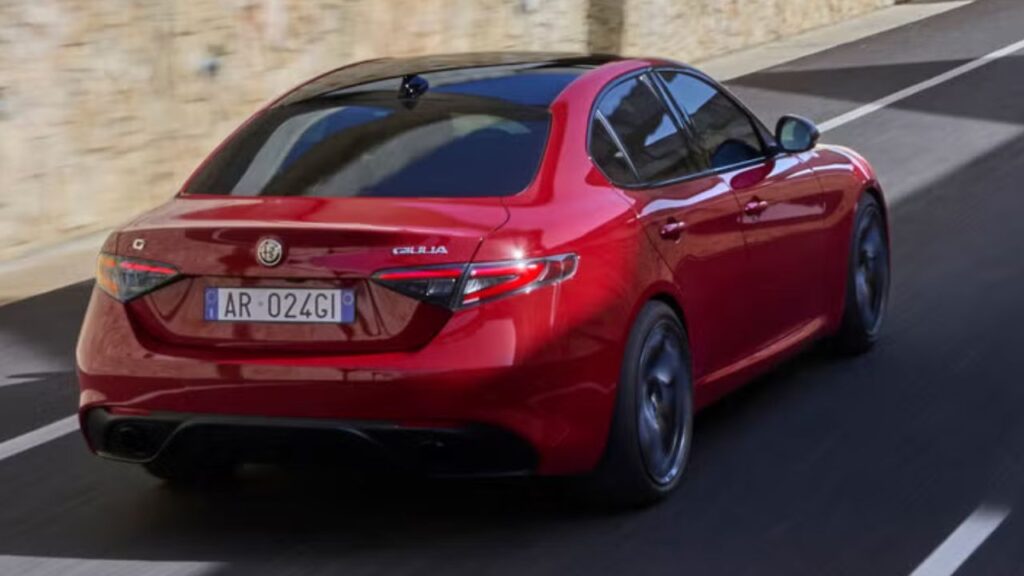
I’ve heard longtime owners describe it the same way: the Giulia makes you want to take the long way home. Whether you’re carving through twisty canyon roads or merging onto the highway, it rewards commitment without punishing you in everyday driving. The Veloce package amps this up with 19-inch wheels, red brake calipers, a limited-slip differential, and sportier bolsters that keep you planted during enthusiastic driving.
How the Giulia Stacks Up: Real Comparisons That Matter
In the ultra-competitive luxury compact segment, the 2026 Alfa Romeo Giulia holds its own—and often wins—on pure driving enjoyment. Its 0-60 advantage over the base BMW 330i is noticeable on paper and even more so behind the wheel. While the latest 3 Series edges ahead in outright refinement and tech integration, few drivers would call it more fun. The Giulia’s power-to-weight ratio and chassis tuning give it that lively, engaging character that makes every mile memorable.
The Mercedes C-Class offers a plusher ride and more upscale interior materials, yet many testers note the Giulia feels more connected and alive. Audi’s A4 is competent and quiet, but it lacks the Alfa’s emotional pull. In head-to-head Alfa Romeo Giulia performance shootouts, the Italian sedan consistently scores high marks for steering precision and overall driver involvement—exactly what enthusiasts prioritize.
Inside the Cabin: Tech, Comfort, and Italian Style
Step inside and you’re greeted by a driver-focused cockpit that blends heritage with modern touches. A 12.3-inch digital instrument cluster offers three layouts—Evolved, Relax, and Heritage—while the 8.8-inch center touchscreen handles navigation, Apple CarPlay, and Android Auto (wired, unfortunately). Leather sport seats are standard, with available 14-way power adjustments and premium Harman Kardon audio for those who want concert-hall sound on the go.
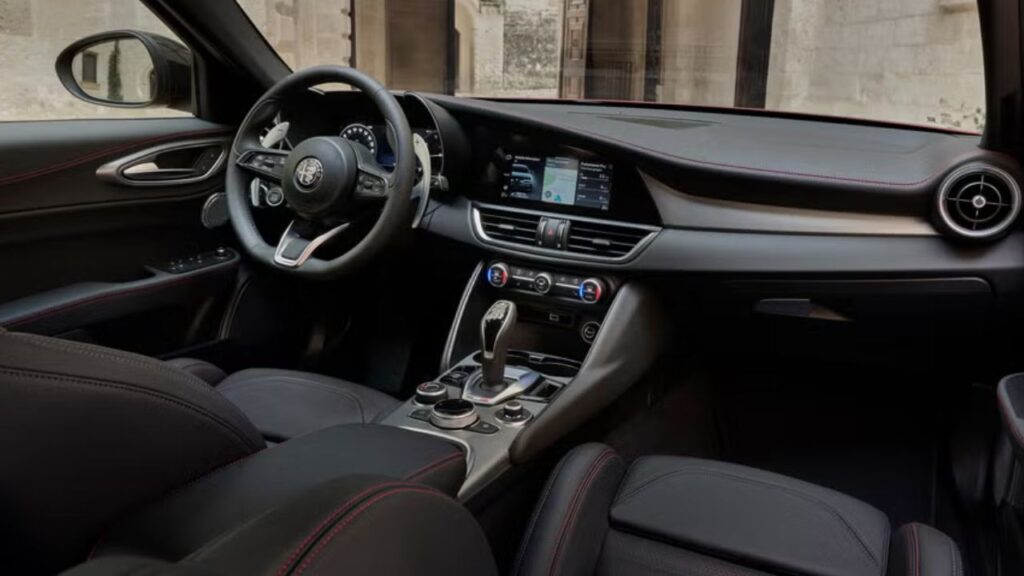
It’s not the most tech-laden cabin in the segment, and that’s part of its charm. Alfa focused on tactile quality and elegant design rather than overwhelming you with screens. Rear-seat space is snug for adults on long trips, but the 13-cubic-foot trunk swallows weekend luggage without complaint. Safety features like adaptive cruise control, lane-keep assist, and forward collision warning come standard, adding peace of mind without intruding on the driving experience.
Pricing, Value, and Who Should Buy One
The 2026 Alfa Romeo Giulia starts around $48,245 for the base model, with the Veloce package pushing it to about $49,870. That positions it competitively against similarly equipped German rivals while delivering more character for the money. Add in Alfa’s strong resale value among enthusiasts and the four-year/50,000-mile warranty with complimentary maintenance, and the value proposition becomes even stronger.
It’s the perfect choice for anyone who buys a luxury sedan not just to commute, but to actually drive. If you value steering feel, balanced handling, and a car that puts a smile on your face every time you fire it up, the Giulia delivers in spades.
In a sea of competent but clinical luxury sedans, the Giulia stands out because it was clearly designed by people who love driving. Its 0-60 performance is impressive, but it’s the way it makes you feel that keeps owners coming back.
Looking Ahead: The Giulia’s Place in Alfa Romeo’s Future
As the industry shifts toward electrification, the 2026 Giulia represents a final hurrah for the pure internal-combustion sport sedan in Alfa’s lineup. The brand has confirmed plans for an all-electric successor, but for now this model carries the torch beautifully. Enthusiasts are snapping them up while they can, knowing that future versions may trade some of that raw, analog joy for efficiency and instant torque.
The Bottom Line on the 2026 Alfa Romeo Giulia 0-60 Experience
After years of testing and talking with owners, one thing remains clear: the 2026 Alfa Romeo Giulia isn’t trying to be everything to everyone. It’s focused on delivering an engaging, emotional driving experience wrapped in elegant Italian styling. Its quick 0-60 times, precise handling, and driver-centric cabin make it one of the most rewarding choices in the luxury compact segment—especially for those who actually enjoy the journey as much as the destination.
If you’re shopping for a sport sedan that feels special every single day, do yourself a favor and test drive a Giulia. You’ll understand why so many enthusiasts refuse to settle for anything less. In a world of increasingly similar cars, this one still stands apart—and that, more than any acceleration number, is what makes it worth celebrating.