
By Sports Car One Staff. Last updated: November 12, 2026
Use 4H when the surface is slippery and you still need to move at road speed. Use 4L only when you need torque at walking pace. That’s the 4H vs 4L decision in one line, and Jeep puts numbers on it: you can shift into 4H at up to 55 mph, but you should stay under 25 mph once you’re in 4L. The mistake most owners make isn’t choosing the wrong range in the mud. It’s leaving a part-time system in either one on dry pavement.
Quick answer: 4H (four-high) drives all four wheels at normal gearing for snow, gravel, sand or mud at road speed. 4L (four-low) adds a reduction gear, 2.72:1 or 4.0:1 on a 2026 Jeep Wrangler, for crawling, steep grades and getting unstuck. Jeep says to stay under 25 mph in 4L.
What changes when you move the lever?
In a part-time system, both 4H and 4L lock the front and rear driveshafts together. The difference is a second gear set inside the transfer case. In 4H the transfer case adds no gear reduction, so the truck behaves the way it does in two-wheel drive, with more grip. In 4L power runs through a reduction gear that multiplies torque before it reaches the axles.
How much reduction you get depends on the hardware. Stellantis’s 2026 Wrangler specification sheet lists a 2.72:1 low range for the Command-Trac case on Sport and Sahara trims and 4.0:1 for the Rock-Trac case on the Rubicon. Multiply the low range by first gear (4.71:1 in the automatic) and the axle ratio and you get the crawl ratio: about 77:1 for an automatic Rubicon with 4.10 gears, against about 44:1 for an automatic Sport with 3.45 gears.
At 77:1 the engine turns 77 times per wheel turn in first gear, so a Rubicon idles over a ledge that a Sport needs throttle and brake to manage.
| Setting | Gear reduction (2026 Wrangler) | Speed guidance (Jeep) | Use it for |
|---|---|---|---|
| 2H | None | Normal driving | Dry or wet pavement |
| 4H | None | Shift at up to 55 mph; no fixed top speed | Snow, ice, gravel, sand or mud at road speed |
| 4L | 2.72:1 or 4.0:1 | Shift at 2 to 3 mph in neutral; stay under 25 mph | Rocks, steep climbs and descents, getting unstuck |
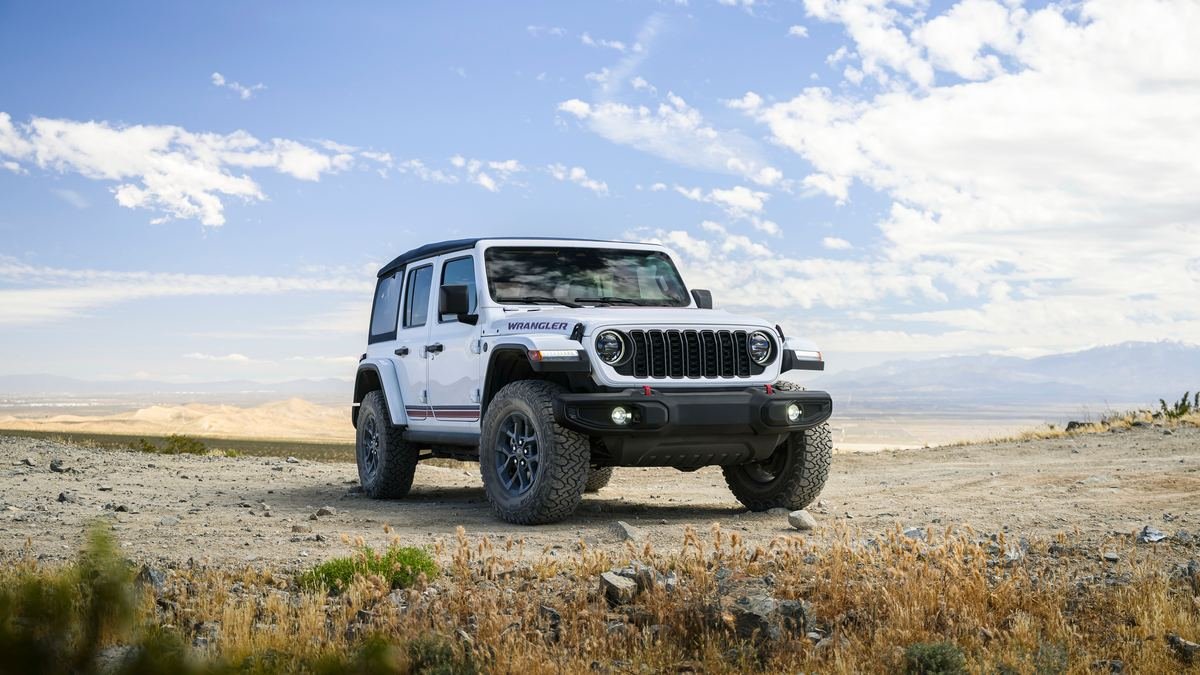
When should you use 4H?
Use 4H whenever the surface lets the tires slip and you’re still moving at normal speed: snow, ice, gravel, wet grass, sand or a muddy two-track. Jeep’s 4×4 FAQ and glossary describes high range as the setting for loose, slippery surfaces when you need more speed than low range allows.
Know what it won’t do. 4H helps you pull away and climb on a snowy road, but it doesn’t help you stop or steer. Your tires and brakes do that, which is why a 4×4 on all-season tires still slides through an icy intersection.
How fast can you drive in 4 High?
There’s no single number. Jeep says not to drive faster than conditions permit and gives no fixed top speed for 4H. The 2019 Ram 2500 owner’s manual reads the same way: shifts between 2H and 4H can be made at up to 55 mph, and after that the road sets the limit.
In practice traction decides it. If the surface is slick enough to need 4H, it’s usually too slick for 65 mph. If it isn’t slick, a part-time truck shouldn’t be in 4H at all. Full-time systems, such as the Selec-Trac case on the Wrangler Moab 392, can stay in high range on normal roads, which Jeep’s FAQ confirms. That’s why your owner’s manual matters more than any rule of thumb.
One shifting tip from the Ram manual: briefly easing off the accelerator after you move the lever helps the transfer case engage.
When should you use 4L?
Use 4L when you need control more than speed: crawling over rocks, climbing or descending a steep grade, pulling through deep sand at walking pace or dragging a stuck vehicle out. Jeep calls low range the setting for extreme off-road situations that need more torque at low speed.
Low range also gives you strong engine braking on a descent, so the truck can walk down a hill in first gear instead of overheating the brakes. It’s the setting for hauling a boat up a slick ramp, too, though you should know your rating first; our towing capacity by VIN guide shows how to find it.
Jeep makes one point owners often miss: more torque isn’t more traction. On glare ice, 4L delivers so much torque so quickly that the tires can break loose. If you’re spinning in 4L on a flat icy lot, 4H with a light throttle is usually the better choice.
How do you shift into 4L without grinding gears?
Most part-time systems want the truck rolling slowly with the transmission in neutral. Jeep and Ram both specify 2 to 3 mph. Put the automatic in N, move the transfer case lever or knob firmly into 4L, then select Drive. Ram’s manual warns you not to pause in transfer case neutral and says some gear noise is normal.
You can shift while stopped, but the gear teeth may not line up and you may need several tries. That’s behind most “my truck won’t go into 4 low” complaints. If an automatic clashes gears, Ram’s fix is to put the transmission in neutral, hold the brake, switch the engine off and finish the shift.
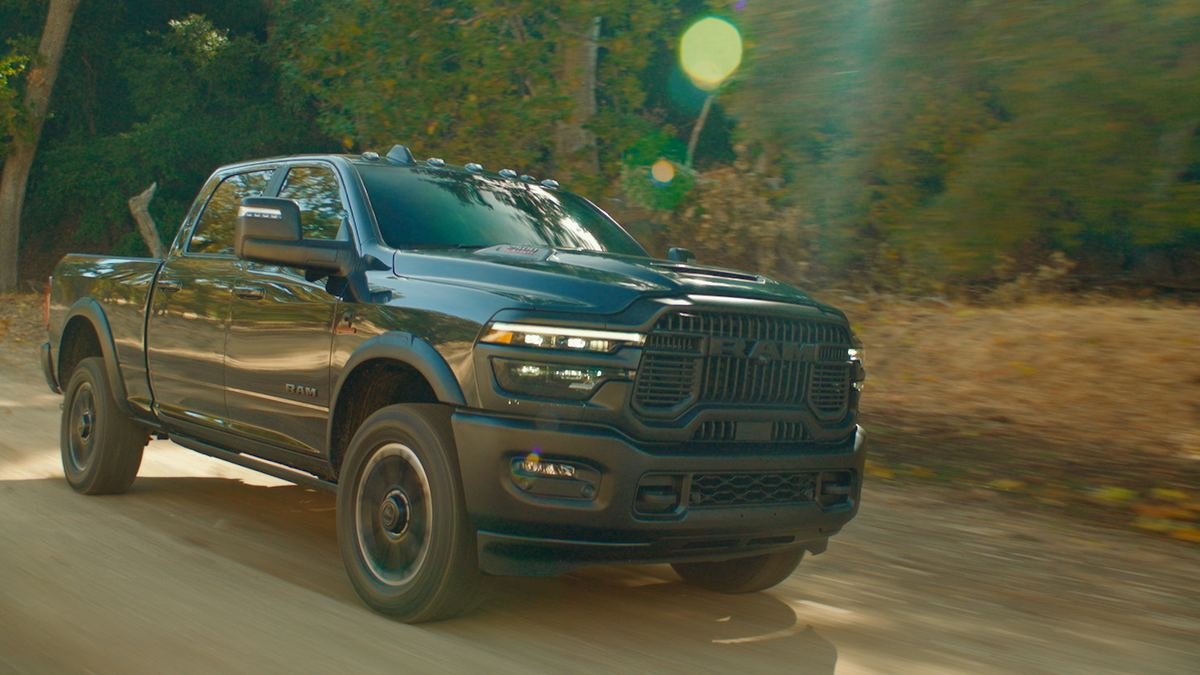
Why shouldn’t you use part-time 4WD on dry pavement?
A part-time system has no center differential, so the front and rear axles must turn at the same speed. In a turn the front wheels travel a longer arc than the rears, and on dry pavement the tires can’t slip to make up the difference. Jeep calls the result binding, or crow hop, and warns it can lead to early part failure. Ram’s manual is blunter about low range: “Do not use 4L (Low) range when operating the vehicle on dry pavement.”
Picture a typical winter morning. You select 4H for a snowy side street, the main road turns out to be plowed and dry, and you forget the lever for 20 miles. You’ll feel the steering tighten in parking-lot turns and hear the tires scrub. That’s driveline wind-up, and the fix is to shift back to 2H as soon as the pavement clears.
Which 4H vs 4L setup should you look for when buying?
Trim choice decides your low range more than most buyers realize. On the 2026 Wrangler, Sport and Sahara come with the 2.72:1 Command-Trac case, while the Rubicon’s Rock-Trac case runs 4.0:1, and Stellantis lists a full-time Rock-Trac as optional on the Rubicon. If you’ll crawl rocks, that 4.0:1 case is the spec worth paying for.
If you mostly drive snowy roads, a full-time case is more useful than a deeper low range, because you can leave it in high range on mixed pavement without binding. Package choices change these specs on other rigs too: see our Bronco Sasquatch package breakdown and the 2026 Wrangler Whitecap guide.
A limitation worth stating: the speeds and procedures here come from Jeep and Ram documents. Ford, Toyota and GM publish their own figures, and some newer electronic transfer cases shift into 4L under different conditions, so check your manual before you rely on any number.
The 4H vs 4L call comes down to one figure you can remember: if you need to go faster than 25 mph, you shouldn’t be in 4L, and if the pavement is dry, a part-time truck shouldn’t be in either.
4H and 4L questions
How fast can you go in 4 high?
Jeep sets no fixed top speed for 4H and says to drive no faster than conditions allow. On Jeep and Ram part-time systems you can shift from 2H to 4H at up to 55 mph. If the road is dry enough for highway speed, a part-time truck belongs back in 2H to avoid driveline binding.
Can you drive in 4L on the highway?
No. Jeep and Ram both say not to exceed 25 mph in 4L, and Ram warns against using low range on dry pavement because it can damage driveline parts. 4L multiplies torque for crawling, so the engine would reach very high rpm long before you got anywhere near highway speed.
Is it bad to drive in 4H on dry pavement?
On a part-time system, yes. With the front and rear axles locked together, dry pavement forces the tires to scrub in turns, which Jeep says causes binding and early part wear. Full-time systems such as Jeep’s Selec-Trac are designed to run in high range on normal roads, so check which type your vehicle has.