
If you’ve been holding out for the 2027 Volkswagen ID. Buzz, you can stop: it isn’t coming to the US. Volkswagen skipped the 2026 and 2027 model years here, and its newsroom now says the electric Microbus returns in the first half of 2027 as a 2028 model. That van is an update of the one sold today, not the cheaper redesign VW’s CEO talked about this month. Knowing the difference decides whether you should wait.
Quick answer: There is no 2027 Volkswagen ID. Buzz for US buyers. Volkswagen updated its 2027 lineup release on Oct. 6, 2026, to say the van will arrive in the first half of 2027 as a 2028 model. VW hasn’t published 2028 pricing. The last US version, the 2025, started at $61,545 with destination.
Last updated: October 29, 2026
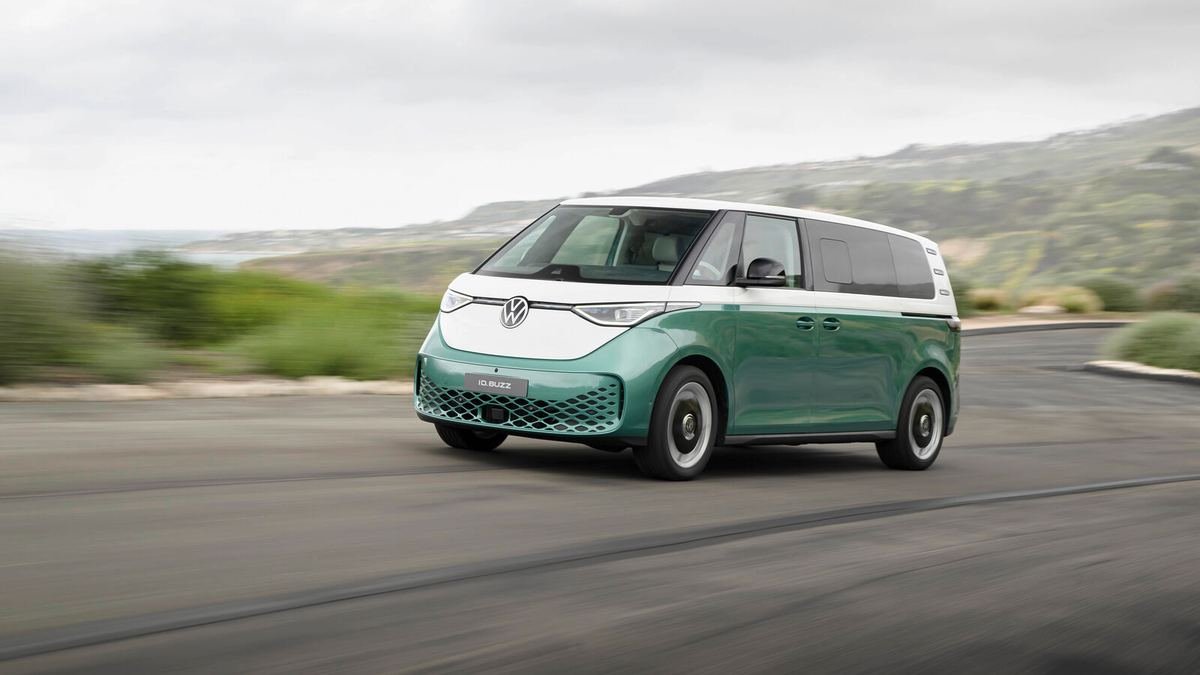
What happened to the 2027 Volkswagen ID. Buzz?
VW said in December 2025 that the US would skip the 2026 model year while dealers sold down 2025 stock. In May 2026 it put the van back in its 2027 lineup with four trims: Pro S RWD, Pro S 4Motion, Tourer 4Motion and Pro S Plus 4Motion.
Then it changed course again. Automotive News reported on Sept. 24 that VW told dealers the van would return as a 2028 model, and on Oct. 6 Volkswagen added that note to the top of its own 2027 lineup release. Every ID. Buzz sold new in the US so far is a 2025.
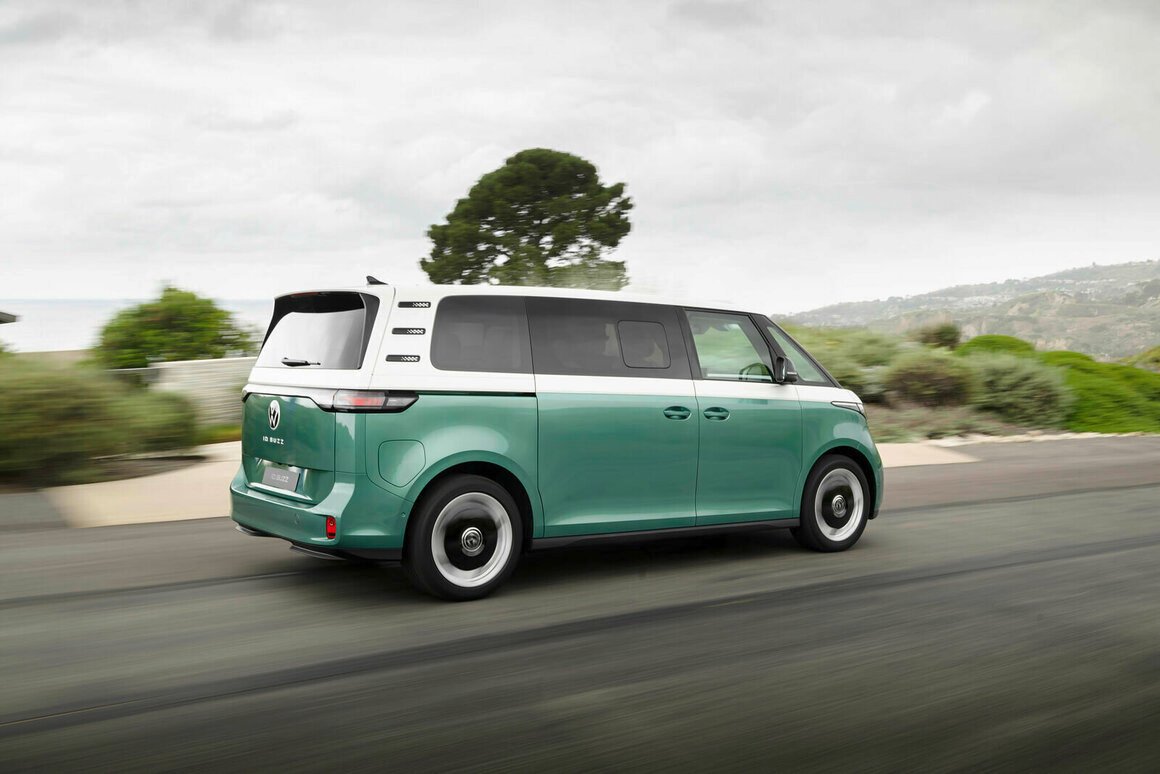
That matters if you’re shopping now. Some VW dealer websites still run “2027 ID. Buzz” research pages with prices on them. Those are placeholders. Check the model year on the window sticker before you hand over a deposit.
What will the 2028 ID. Buzz change?
Volkswagen hasn’t released a 2028 spec sheet, so the best guide is what it promised for 2027. The May release listed hard buttons on the steering wheel, the Android-based ID.S 6 software with an app store, a NACS adapter for Tesla Superchargers and a Candy White over Cherry Red paint scheme. Car and Driver, citing Automotive News, reported that the 2028 adds vehicle-to-load power and a digital key.
The Tourer is the new trim to watch
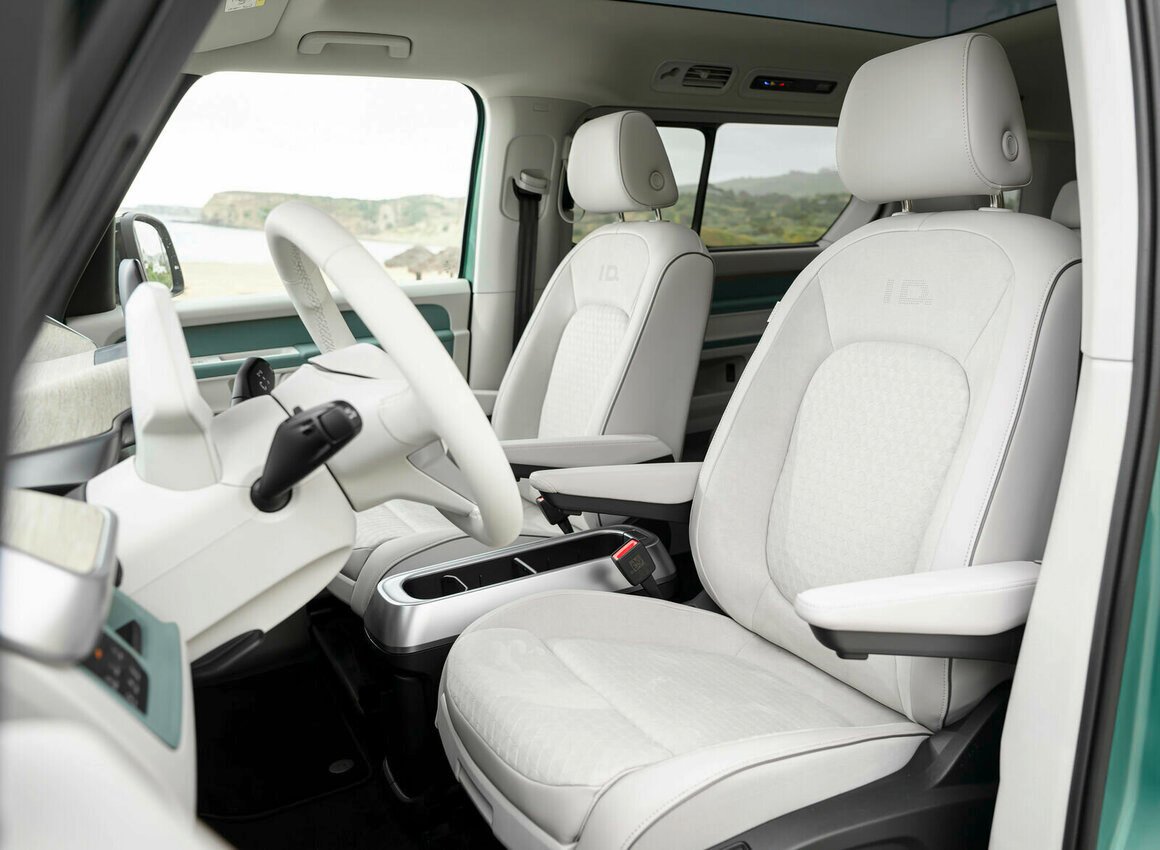
The Tourer, built on the Pro S 4Motion, is for people who bought a Buzz to sleep in it. VW lists a fold-out mattress platform, window blinds, ventilation panels and an exterior table with chairs. It also gets a retractable tow hitch, captain’s chairs, Area View cameras and an electrochromic roof, plus an Overnight Mode that adjusts the van’s systems for camping.
The hardware is another story. Nothing VW has announced replaces the 91-kWh battery or the MEB platform under it, so we expect range and charging close to the 2025’s. VW’s 2025 press kit lists 234 EPA miles for rear-drive, 231 for 4Motion, and 10–80% DC charging in about 26 minutes at up to 200 kW. That’s our read, not VW’s statement, and it changes if VW announces a new pack.
How much will the 2028 ID. Buzz cost?
VW hasn’t said. The 2025 is the only real reference point. The press kit put the Pro S at $59,995, the Pro S Plus at $63,495 and the launch-only 1st Edition at $65,495, before a $1,550 destination charge.
Here’s that base price next to the two family haulers you’re most likely to cross-shop, using each automaker’s current figures:
| Model | Starting MSRP | With destination | Powertrain |
|---|---|---|---|
| 2025 VW ID. Buzz Pro S | $59,995 | $61,545 | Electric, 234-mile EPA range |
| 2027 Kia EV9 Light Short Range | $54,990 | $56,635 | Electric, 230-mile range |
| 2027 Kia Carnival Hybrid LXS | $41,490 | $43,035 | Hybrid, 32 mpg combined |
The Buzz costs $4,910 more than the cheapest EV9 and $18,510 more than a Carnival Hybrid. Per mile of rated range, it works out to about $256 against $239 for the EV9, according to Kia’s 2027 EV9 pricing and the range figures in our 2027 Kia EV9 price breakdown. You pay a premium for the shape. The shape is why most people want one.
Rated range and highway range aren’t the same thing. MotorTrend’s yearlong test van covered 213 miles on the magazine’s road-trip range test, it reported on Oct. 15, about 9% short of its 234-mile rating. Plan highway legs of roughly 180 miles if you want a buffer at the next charger.
Why did VW pull the ID. Buzz from US showrooms?
Sales. Volkswagen sold 6,140 ID. Buzz vans in the US in 2025, according to its year-end sales report. InsideEVs reported on Oct. 13, from VW’s third-quarter figures, that it sold 432 between July and September 2026, down 82.5% from 2,469 a year earlier.
VW brand CEO Thomas Schäfer was blunt at the Paris auto show this month. He told Auto Express the van is “on the wrong cost base,” which makes real volume hard to reach. The Buzz is built in Hanover, Germany, so every US unit also carries import tariffs that a US-built EV like the EV9 avoids.
Should you wait for the cheaper next-generation Buzz?
Not if you need a van in the next two years. Schäfer said the next-generation Buzz will move to VW Group’s Scalable Systems Platform and could use cheaper lithium-iron-phosphate cells, Car and Driver reported on Oct. 14. Kelley Blue Book noted on Oct. 22 that Auto Express expects the first model on that platform to be a flagship SUV before the end of the decade, with the Buzz after it. VW hasn’t given a date.
So don’t mix up the two vans. The 2028 arriving next year is today’s Buzz with better software and a camping trim. The cheaper redesign comes later, and MotorTrend’s Erik Johnson argued on Oct. 15 that it needs a price near $50,000 to sell in volume.
Our take: if the Tourer’s camping kit is what you want, wait for 2028 pricing. If you want a Buzz for the least money, a leftover 2025 is the play, though stock is thin. Kelley Blue Book reported on Sept. 25 that dealers sold just 140 nationwide in August.
On a 2025, ask the dealer to confirm two spring 2025 recall fixes, which EV news site eletric-vehicles.com reported on Sept. 25: one for a third-row bench too wide for its two seat belts and one for a brake warning display.
Open to a two-row EV instead? Our 2027 Mustang Mach-E price guide covers a cheaper option, and you’ll find more in our electric vehicle news.
ID. Buzz questions buyers are asking
Is the VW ID. Buzz discontinued in the US?
No. Volkswagen skipped the 2026 and 2027 model years in the US, but its newsroom says the van returns in the first half of 2027 as a 2028 model. Kjell Gruner, CEO of Volkswagen Group of America, said in December 2025 that VW is not canceling the ID. Buzz here. Some dealers still have 2025 vans in stock.
Why did VW stop selling the ID. Buzz?
Slow sales. VW sold 6,140 in the US in 2025 and just 432 in the third quarter of 2026. A starting price of $61,545 with destination and a 234-mile range made it a hard sell against cheaper minivans and three-row EVs. VW CEO Thomas Schäfer said in October 2026 that the van sits on the wrong cost base.
When will the 2028 VW ID. Buzz come out?
Volkswagen says the 2028 ID. Buzz arrives in the first half of 2027. It hasn’t announced pricing or an exact on-sale date. Based on its 2027 plans, expect hard steering-wheel buttons, newer software, a NACS adapter and a camping-focused Tourer trim. Car and Driver, citing Automotive News, reported vehicle-to-load power and a digital key for 2028.
How far can a VW ID. Buzz go on a charge?
The EPA rates the 2025 ID. Buzz at 234 miles with rear-wheel drive and 231 miles with 4Motion all-wheel drive. Highway range runs lower: MotorTrend’s long-term van covered 213 miles on its road-trip test. DC fast charging from 10% to 80% takes about 26 minutes at up to 200 kW, according to Volkswagen.
When to expect 2028 ID. Buzz pricing
There won’t be a US-market 2027 Volkswagen ID. Buzz, and the next one you can order wears a 2028 badge and lands in the first half of 2027. VW told Automotive News it will share more details in the months ahead, so watch for that number. If the Tourer comes in within a few thousand dollars of the 2025’s $61,545, it’s the version that earns the premium.